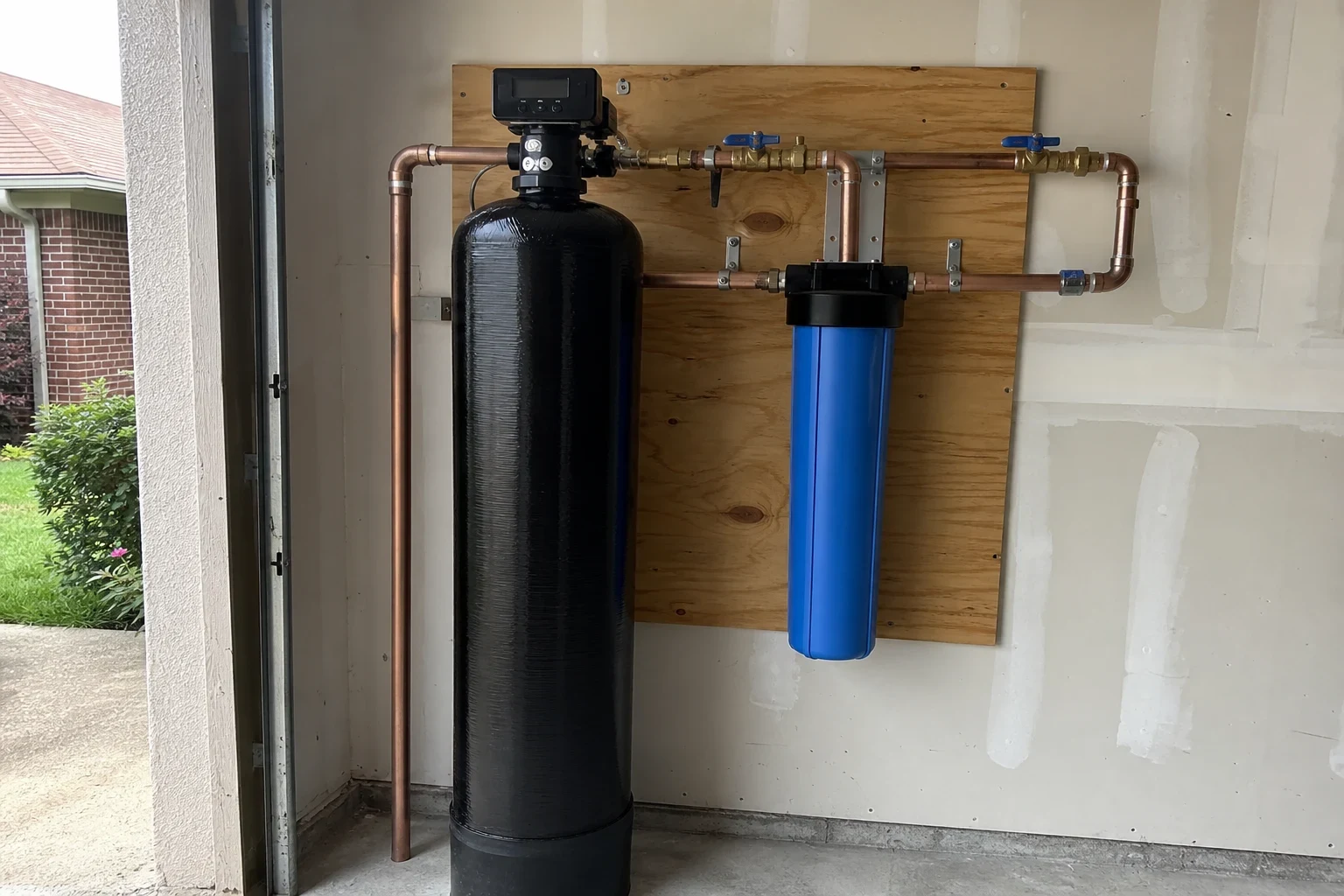
ServicesWhole-house carbon filtration
Whole-House Carbon Filtration in Cedar Hill
Our whole-house carbon systems clean up the chlorine flavor and pool-like odor before water reaches any faucet, shower or appliance in your home. We check your water first, size the unit to your plumbing, protect the floors while we work and leave the area as neat as it was.
What a whole-house carbon filter does for your home
A whole-house carbon filter sits on the main water line, so every faucet, shower and appliance gets filtered water. Activated carbon grabs chlorine and many of the compounds behind off tastes and odors as water passes through it. You get water that smells clean in the shower and tastes better from the kitchen tap, and the minerals in it stay the same.
City water in Cedar Hill is treated and safe to drink, and the disinfectant that keeps it that way is usually what people notice. Some suppliers use chlorine and others use chloramine, which needs a catalytic carbon and more contact time to remove. We confirm which one your water carries before we recommend anything, so you are not sold a filter built for the wrong job.
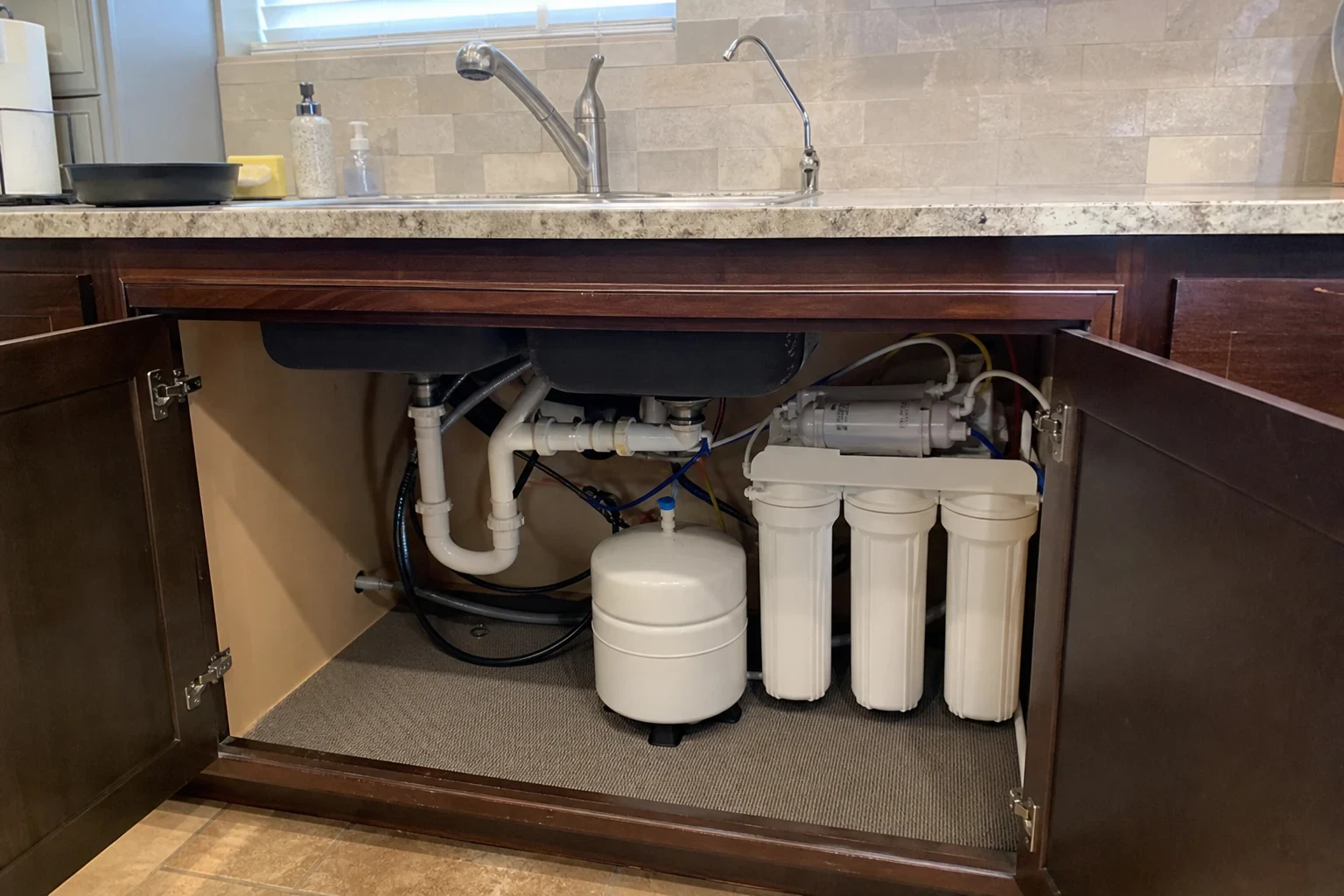
If your main goal is better drinking and cooking water, an under-sink reverse osmosis unit may be the smarter buy. We will tell you that plainly.
What the installation includes
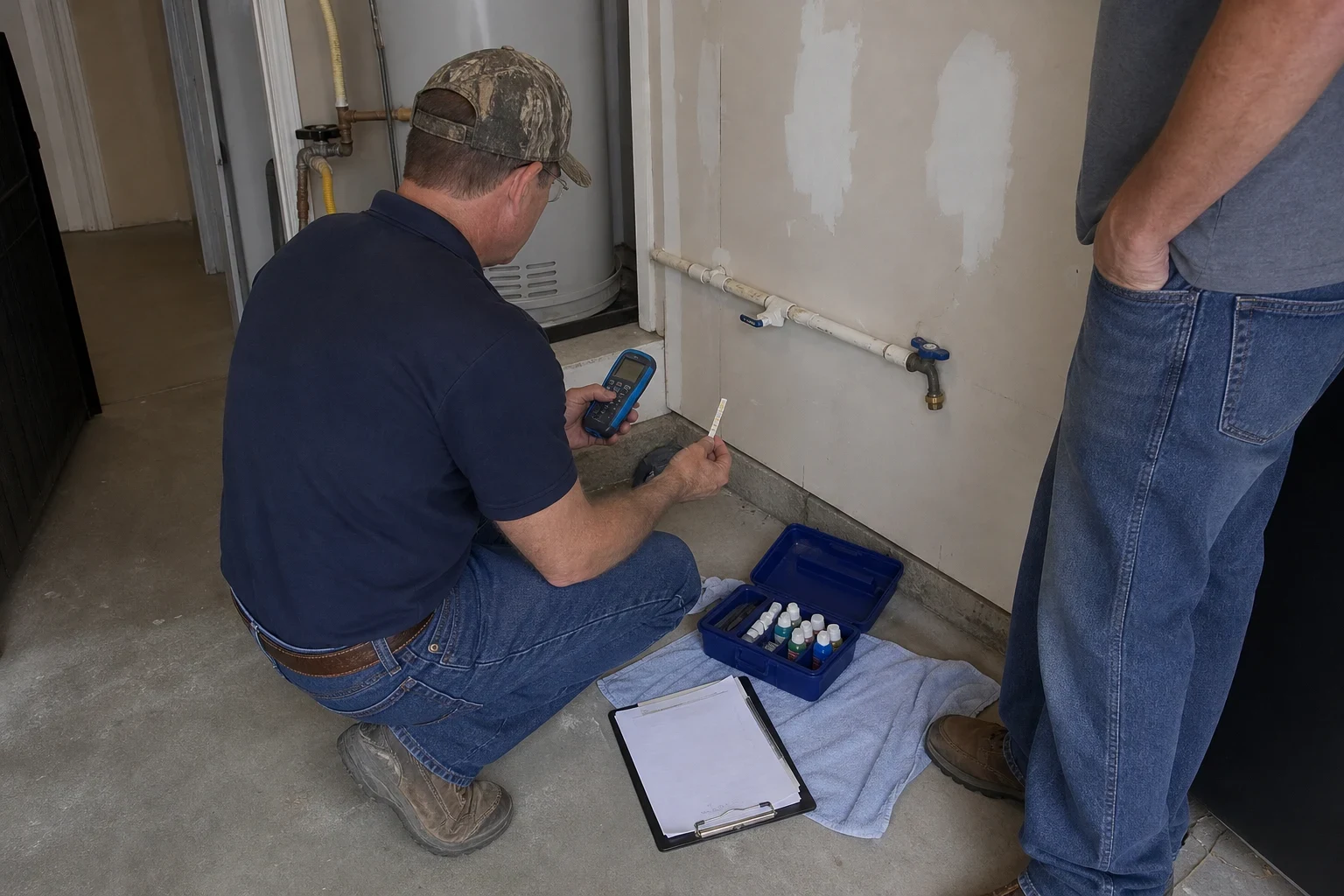
- A water check before anything is sold
- We test disinfectant levels, pressure and flow at your home and look at where the main line comes in. If the readings point to a different fix, like iron and sediment filtration, we say so.
- A system sized to your water use
- Carbon needs contact time to work. We size the tank or housings to your bathrooms and peak use so the shower keeps its pressure when the dishwasher and washer are running.
- Grit stage up front
- Before water touches the carbon, it passes through a sediment cartridge that traps sand and rust flakes. With that stage doing the rough work, the carbon stays open and goes longer between changes.
- Bypass valve and shutoffs
- We plumb in a bypass so the system can be serviced or skipped without cutting water to the whole house.
- Protected work area and full cleanup
- Drop cloths go down along our path and around the install spot, and we wear shoe covers inside. The first flush of carbon dust goes to a drain or outdoors, never across your floor. We haul away packaging, cut pipe and old fittings before we leave.
- A walkthrough you can keep
- We show you the bypass and shutoff, explain when the filters or media are due, and leave those details written down.
Signs a whole-house carbon filter makes sense
Showers that smell like a pool
A swimming-pool smell in a steamy bathroom is chlorine escaping from hot water. Filtering at the main line takes it out before water ever gets to the shower head.
An off taste at every faucet
If chlorine shows up at the bathroom sink, the fridge dispenser and the kitchen tap alike, one point-of-use filter only helps in a single place. A filter on the main line handles all of them.
Your pitcher filter can't keep up
Constantly refilling a pitcher while you still cook with unfiltered water wears thin. With a whole-house system, the water in your stockpot matches the water in your glass.
Summer makes the water worse
In hot months, disinfectant levels can rise to keep warm water in the pipes safe. When taste and odor get stronger every summer, carbon fits the problem well.
Skin and hair feel dry after bathing
Plenty of people tell us their skin and hair feel less dry after chlorine is filtered out. Everyone is different, so we won't claim more than that.
What drives the cost
We set a price for each install once your water is tested and we've looked at your plumbing. The written estimate separates parts from labor so every dollar is accounted for. These factors affect the total the most.
Chlorine versus chloramine
Removing chloramine takes catalytic carbon and a bigger bed so the water stays in contact long enough. That media is pricier than regular carbon.
House size and how much water you use
Extra bathrooms and higher peak flow mean a larger tank or added housings so pressure holds steady.
Location of the main line
A main line on an open garage wall is easy to get to. One that rises outside next to the slab may need rerouting plus an enclosure to shield the system from summer sun and the odd freeze.
Cartridges or a media tank
Cartridge setups generally cost less to put in but need changing more often. A media tank costs more at the start and runs longer between service visits.
Permits and extras
When your city requires a plumbing permit, we handle it and list it on the estimate. Adding a kitchen reverse osmosis unit on the same visit changes the total as well.
How install day goes
- 1
Phone call and water test
We talk through what you are noticing, then visit to test your water and look at the main line. You get a written, line-item estimate before anything is scheduled.
- 2
Protecting the space
On install day we lay drop cloths, move or cover anything near the work spot and tell you before the water goes off. Most installs happen in the garage or near where the main enters, which keeps foot traffic out of your living areas.
- 3
Plumbing the system in
We cut into the main line, add the sediment prefilter, the carbon unit and the bypass valve, then bring the water back on and check every joint under pressure for leaks.
- 4
Flushing and cleanup
New carbon releases fine black dust on its first run, so we flush it to a drain or outside until the water runs clear. Then we wipe down the equipment, fold up the drop cloths and sweep the area.
- 5
Walkthrough
We run a faucet with you, show you the bypass and answer questions. You know exactly what to watch for and when service is due.
Questions about whole-house carbon filtration
Will a carbon filter soften my water?
No. Carbon removes chlorine, chloramine and many taste and odor compounds, but it leaves calcium and magnesium alone. If you are seeing scale, we start with a hardness test and only suggest a water softener if the numbers support one.
Will I lose water pressure?
A system sized to your home should cause little noticeable drop. Trouble comes from undersized filters or clogged cartridges, which is why we measure your flow first and add a sediment prefilter to protect the carbon.
When will the carbon have to be changed?
Your household's water use and the disinfectant level set the pace, along with the style of system you choose. Cartridge housings get swapped out more often, and a tank of media can go much longer between changes. Our filter replacement and maintenance service keeps the schedule for you, so it never slips your mind.
Is my city water unsafe without one?
No. Cedar Hill water is treated to meet drinking water standards. A carbon filter is about better taste and smell and removing the disinfectant once the water reaches your home, not about fixing unsafe water.
How much mess does the install make?
Very little, because we plan for it. We cover floors along our path, keep carbon dust out of the house during the flush and take every scrap of packaging and pipe with us. Most people find the space looks the same as before, plus a new filter on the wall.
Do I still need a drinking water filter?
For most homes, whole-house carbon is enough for good-tasting water. If you have older plumbing, want extra assurance on trace contaminants or prefer very low-mineral water for coffee and cooking, an under-sink reverse osmosis unit adds that at the kitchen tap.
Better water from every faucet, and a clean space after we go
Describe what you're noticing and we'll schedule a water test at your house. You'll receive a clear estimate in writing and an install day that's careful with your floors and your schedule.