ServicesIron and sediment filtration
Iron and Sediment Filtration in Cedar Hill
Orange rings in the toilet, a metallic taste or sand in your faucet screens all point to something in the water that a filter can catch. We test first, size the system to what we find, and install it with floors covered and the work area left clean.
What this filtration does for your home
Iron and sediment are two different problems that often show up together. Sediment is physical: sand, silt, rust flakes from aging pipes, or debris stirred up after work on a water main. Iron is usually dissolved, so the water can look clear from the tap and then turn orange after it sits in a tub or toilet tank.
A sediment filter strains out the particles, rated by how small a speck it will stop. An iron filter goes further, turning dissolved iron into a solid it can trap and then rinsing that buildup down a drain on a timer. Many homes need only one. Some need both, and a water test tells us which.
The payoff is simple. Fixtures and laundry stop staining, faucet aerators and ice makers stop clogging, and any carbon filter, softener or reverse osmosis unit downstream lasts longer because it is no longer catching grit.
What the job includes
- A test before any recommendation
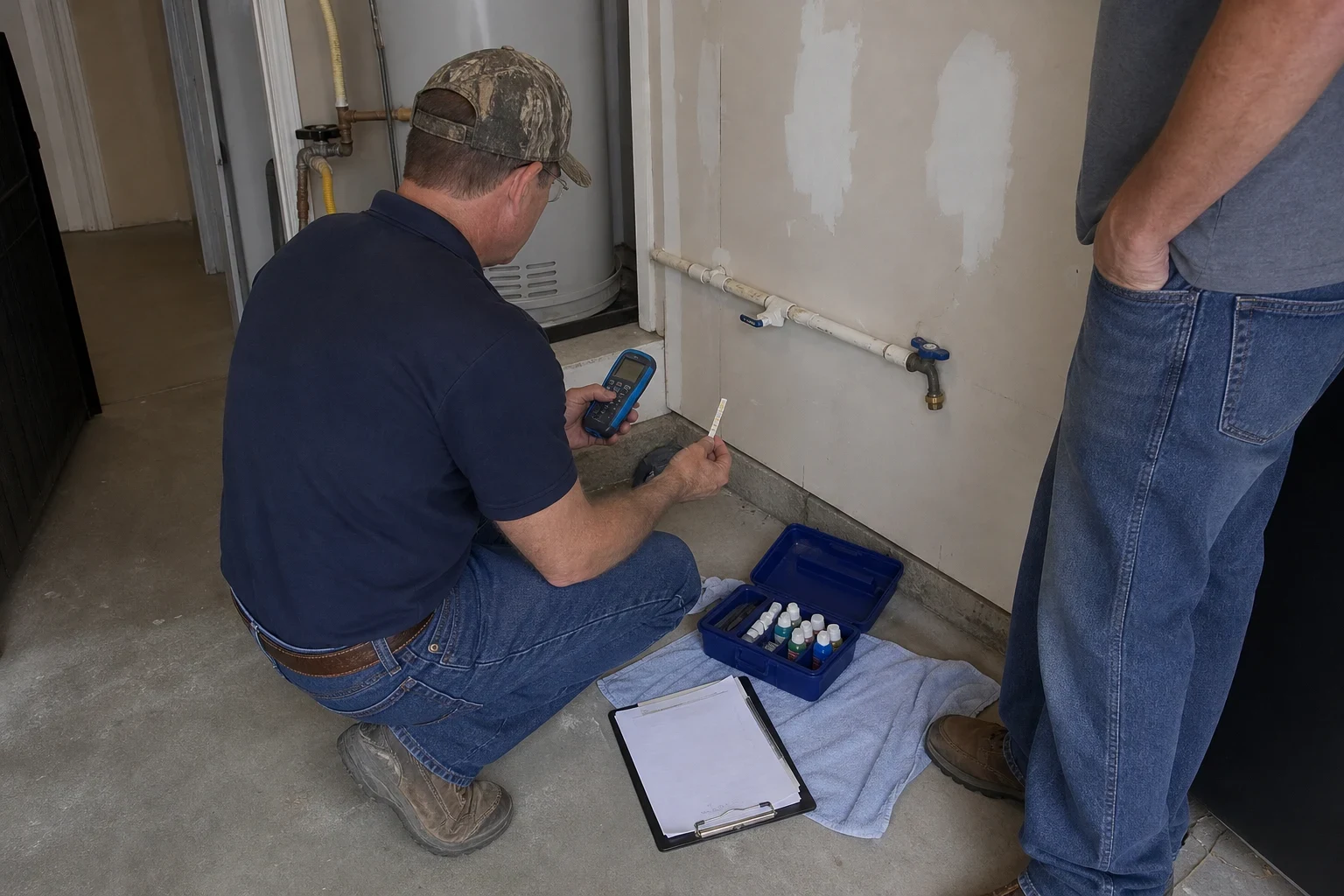
- We check iron, manganese, pH and visible sediment so the system matches your water. If the numbers are low, we tell you that a basic sediment filter may be all you need.
- Sediment pre-filter
- A spin-down screen or cartridge housing at the main line catches sand and flakes. We pick a micron rating that stops the grit without choking your water pressure.
- Iron removal system
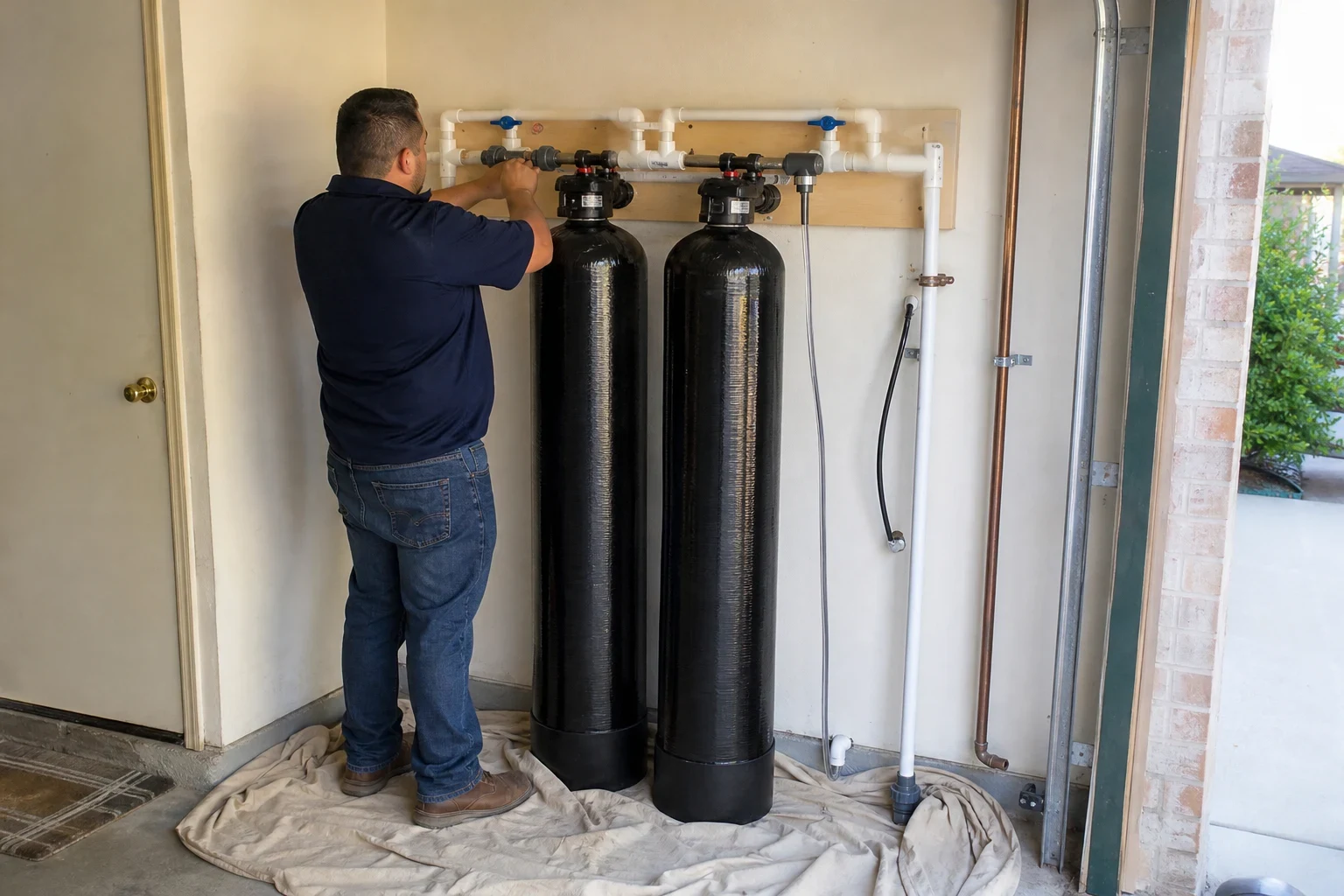
- For dissolved iron we install an oxidizing media tank that backwashes itself. It needs a drain and an outlet, and we plan both before the install day.
- Service valves on both sides
- Your household can still use water while the filter is being serviced, because the system gets its own bypass route. Isolation valves on either side of the housing turn a cartridge swap into a short, dry job.
- Protected floors and a clean finish
- Drop cloths go down before tools come out, and we wear shoe covers indoors. Packaging, old fittings and cut pipe leave with us, and we wipe down the area before we go.
Signs iron or sediment is in your water
Rust-colored staining
Orange rings in the toilet, streaks below faucets or white clothes turning yellow are typical iron signs. Bleach usually makes those laundry stains darker.
Water that tastes like metal
Even moderate iron can give coffee and tea an off flavor or leave a tinny edge on plain water.
Sand in aerators and screens
Sand or dark specks inside a faucet aerator mean sediment is getting to your fixtures. The screens on washers and ice makers plug up the same way.
Slimy film in the toilet tank
Reddish slime can be a sign of iron bacteria, which calls for a different treatment. Testing before you buy anything is worth it.
Filters that clog too soon
When a carbon cartridge or RO prefilter goes brown within weeks, it's catching sediment it wasn't meant for, and you pay for the extra replacements.
What changes the price
Water supplies and plumbing layouts differ from house to house, so one price can't fit every home. Your written estimate breaks out each part and each step, so the cost is easy to follow. These are the biggest factors.
How much iron, and what kind
A cartridge housing may handle light sediment by itself. More dissolved iron, manganese or iron bacteria means a self-backwashing media tank and sometimes a pretreatment stage.
People, bathrooms and flow
Bigger households with more bathrooms need a larger tank so pressure stays steady with two showers and the washer going together.
Where the main line sits
A main line out in an open garage takes less time than one hidden in a cramped closet or behind finished walls.
A drain and an outlet
Backwashing filters need both close by. When they aren't, the extra plumbing or electrical work is priced before the job starts.
Other equipment at the same visit
Putting in whole-house carbon filtration or a softener on the same day lets both jobs share fittings and labor.
How the work goes
- 1
Start with a phone call
Describe the stains, taste or grit you have noticed and which fixtures show it most. We ask a few things about your plumbing and pick a visit time that suits your week.
- 2
Test and look at the setup
At your home we test the water and check where the main line enters, where a drain and outlet sit, and how much room there is. You get a written, line-item estimate before any work is scheduled.
- 3
Install day
We cover the floor path and work area, shut off the water and plumb in the system. Most homes are without water for a few hours, and we tell you the window ahead of time.
- 4
Startup and flush
We run the first backwash, flush the lines and check for leaks at every joint. You may see some discolored water briefly as old buildup clears.
- 5
Cleanup and walk-through
We haul off every scrap, wipe down the equipment and floor, and show you the bypass, the filter housing and what maintenance looks like.
Questions about iron and sediment filters
Do I really need a test first?
Yes. Sediment, dissolved iron and iron bacteria each need a different fix, and guessing often means buying the wrong system. Our water testing shows the type and level so we can recommend the smallest setup that solves the problem.
Will an iron filter soften my water?
No. It removes iron and sediment, not the calcium and magnesium that cause hardness. If a hardness test shows you would benefit, we can talk about water softeners, but we only suggest one when the numbers support it.
How much mess should I expect?
Very little. We lay drop cloths along the path and around the work area, wear shoe covers inside and clean up as we go. When we leave, the space looks the way it did, with new equipment in it.
How long will we be without water?
Usually a few hours on install day. We give you a time window in advance so you can fill a pitcher or plan showers around it.
What maintenance does the system need?
Sediment cartridges need changing when they discolor or pressure drops. Media tanks run their own backwash, though the media wears out over time. Our filter replacement and maintenance visits keep both on schedule, and we clean up after those too.
Stain-free fixtures and clear water, with no mess left behind
Let us know what's showing up in your sinks, laundry or faucet screens. We'll schedule a test, put the estimate in writing and leave your home clean once the job is finished.