ServicesWater softeners
Water Softeners in Cedar Hill, Sized From a Real Hardness Test
We start with a hardness test at your tap, not a sales pitch. If your water is hard enough to cause scale and spotting, we size a softener to your household and install it carefully. If it isn't, we tell you so and point you to what will help.
Why We Test Before We Recommend a Softener
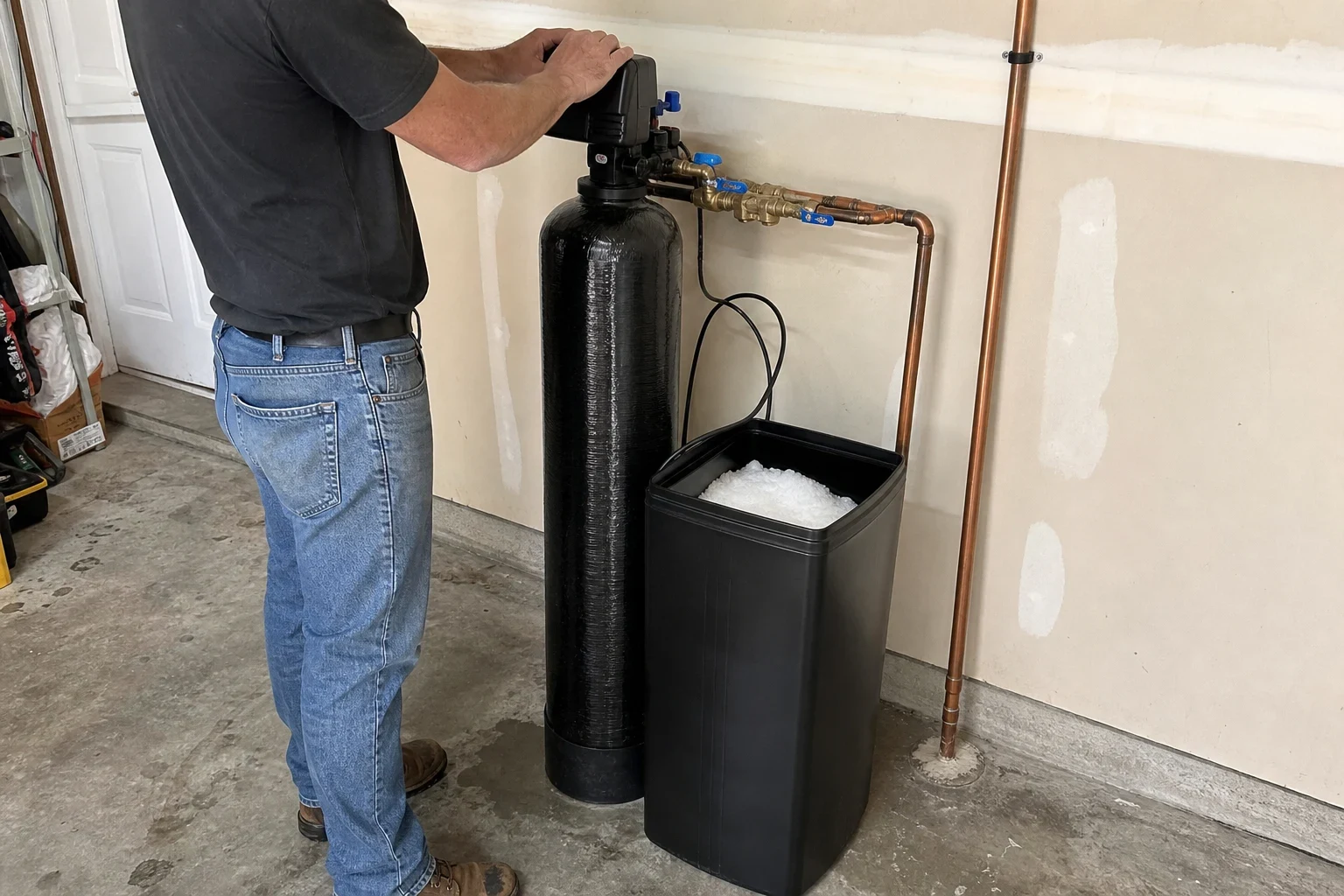
Inside a softener tank sits a bed of small resin beads. As water flows through, those beads pull out the dissolved calcium and magnesium and release a little sodium or potassium in their place. The result is less of the chalky scale that collects in water heaters, plugs faucet aerators and spots your glasses. A softener won't touch chlorine taste, odor or most other contaminants, so it only earns its place when hardness is the real issue.
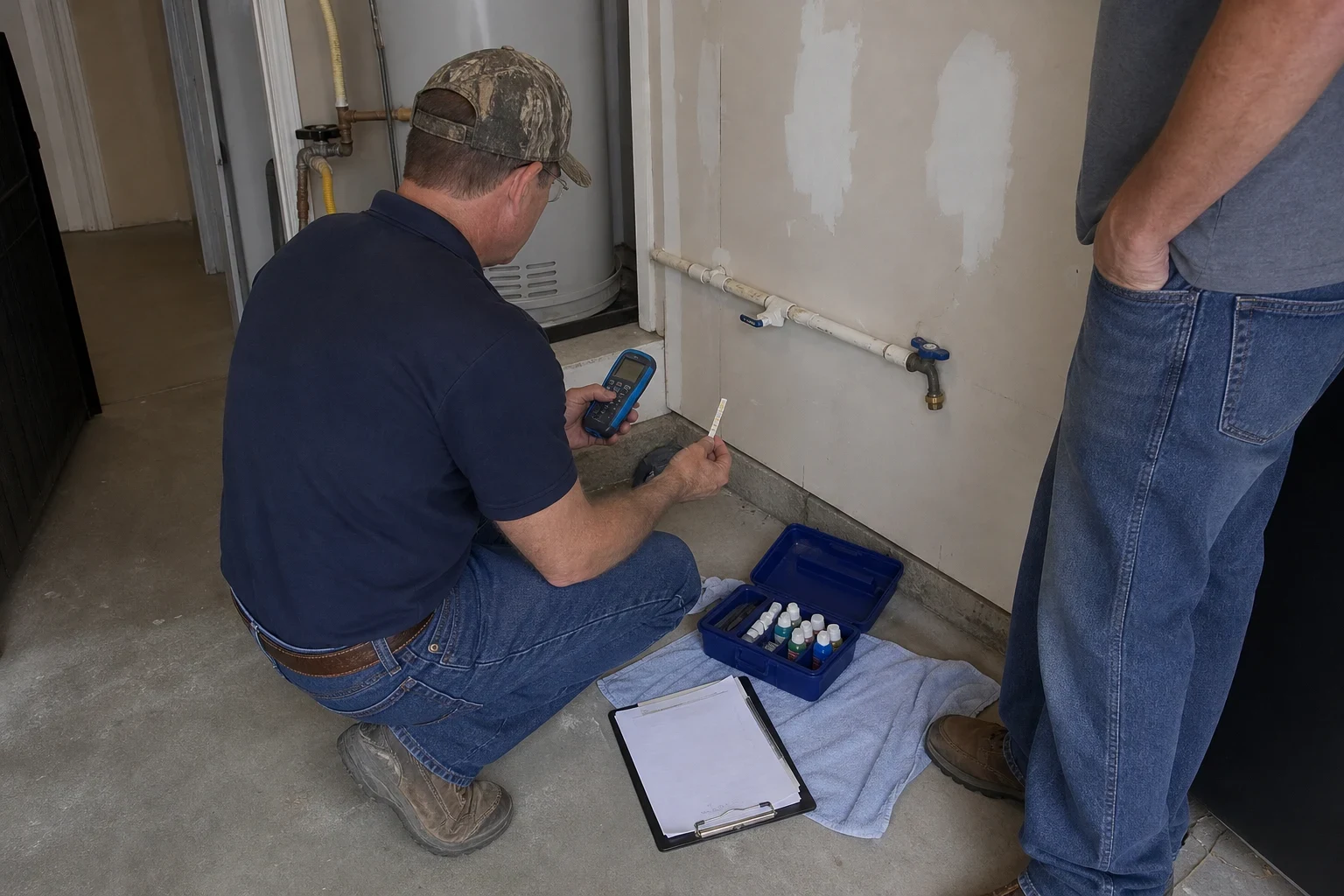
Hardness changes from one water supply to another, and the guesses you see online are often far off. So we measure it in grains per gallon right at your kitchen sink, check for iron at the same time, and give you the number in writing. A softener that is too small runs out mid-shower, and one that is too big wastes salt and water. Testing first avoids both.
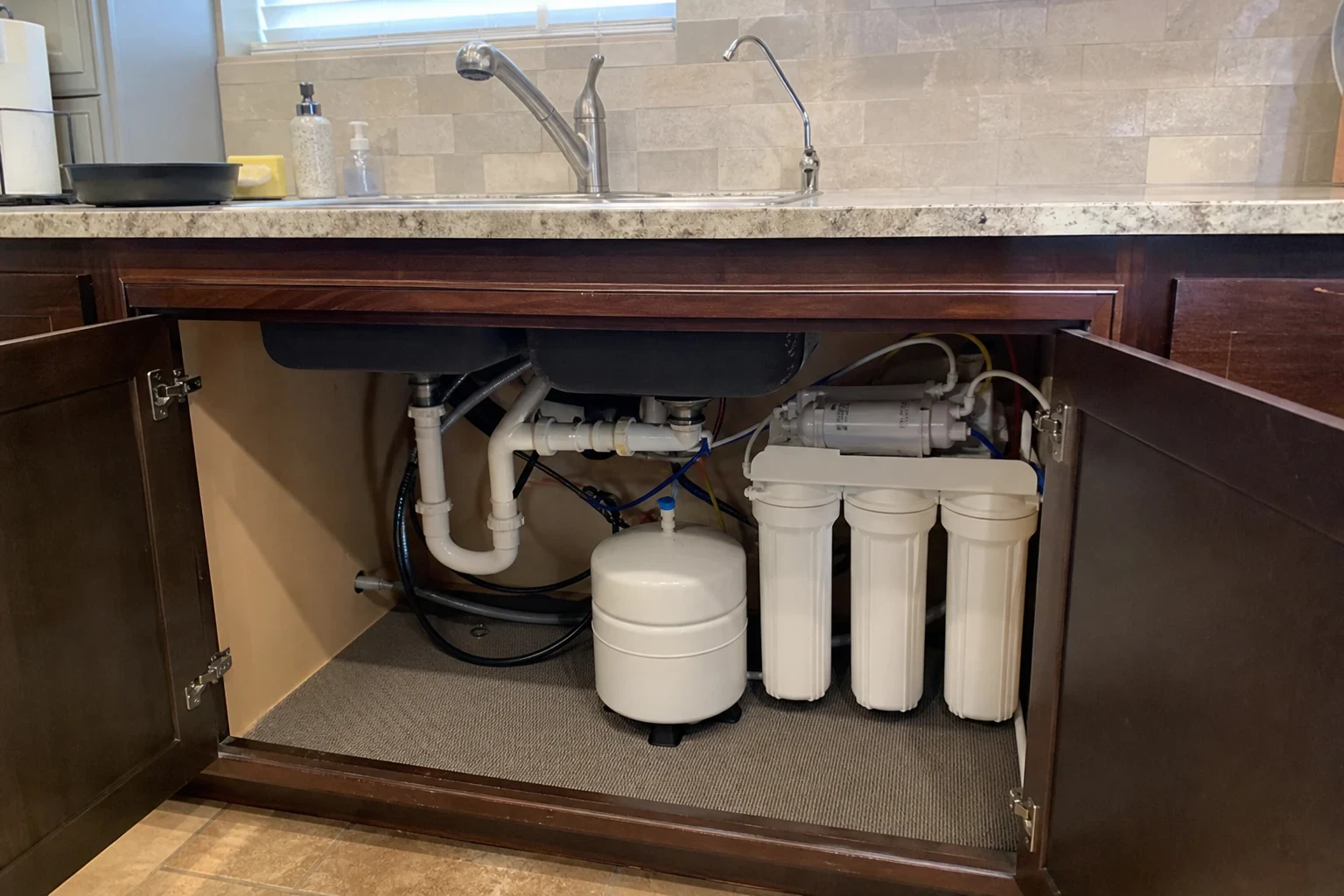
If the test shows soft or only slightly hard water, we will say so plainly. Often whole-house carbon filtration or an under-sink reverse osmosis system is the better answer for what you are noticing.
What Comes With a Softener Install
- Testing for hardness and iron
- No quote happens until your water is tested. Too much iron can clog softener resin, so we measure that as well and let you know if a pre-filter makes sense.
- Sized for the people in your home
- Your hardness reading, household size and normal water use decide the size of the unit. Those same numbers set how often it regenerates and how much salt it uses.
- Main line tie-in with a bypass
- A bypass valve on the main line lets you take the softener offline while the house keeps its water. Outside hose bibs can usually stay on hard water so you use less salt.
- Drain line and brine tank ready to go
- We run the regeneration drain to a proper drain point with an air gap so dirty water can't siphon back. Then we fill the brine tank to the right level, add the first bags of salt and program the control head.
- Covered floors and a clean exit
- We lay drop cloths from your door to the work spot and wear shoe covers inside. Cut pipe, packaging and any spilled water are gone when we leave.
Signs Hard Water May Be Behind the Trouble
Chalky buildup around faucets
White rings at the base of faucets, showerheads that spray off to the side and aerators packed with grit are classic signs of mineral scale.
Cloudy glasses from the dishwasher
If glassware comes out filmy after a wash cycle, even when you use rinse aid, hard water is a likely cause.
A water heater that rumbles or lags
Crackling or rumbling sounds from the tank usually mean scale has built up on the bottom. That layer also forces the heater to work harder to deliver the same hot water.
Soap that barely suds up
Minerals in hard water tie up soap, so shampoo and dish liquid seem weak and leave a film on your skin and on tile.
Rough towels and faded clothes
Washing doesn't rinse the minerals out of fabric. Towels turn stiff and dark clothes lose color sooner than they should.
How the Work Goes, Start to Finish
- 1
Test and talk it over
We test your water at the tap, show you the reading and explain whether a softener is worth it. You get a written, line-item estimate before any work is booked.
- 2
Prep the space
On install day we cover the floor along our path and around the main line, usually in the garage or utility area. Anything nearby gets moved or covered before we cut pipe.
- 3
Install and connect
We shut off the water, tie in the bypass valve and softener, run the drain line and set the brine tank. Most homes are without water for a few hours at most.
- 4
Start up and check
We run a first regeneration, check every joint for leaks and retest the water to confirm it's coming out soft. Then we show you how to add salt and use the bypass.
- 5
Clean up and walk through
We wipe down the area, pick up every scrap and bag our trash to take with us. The space should look like we were never there, apart from the new equipment.
What Affects the Price of a Softener
Every quote starts from your hardness test, so the price matches what your water actually needs. We give you a written estimate before booking, broken out by equipment and labor, so there are no surprises on install day.
- Hardness level and household size
- Harder water and more people mean more grain capacity, which means a larger resin tank and control valve.
- Location of the main line
- A main line that's easy to reach in the garage takes less time than one behind finished walls or in a tight closet. The distance to a usable drain also matters.
- Iron or sediment in the water
- If the test finds iron or grit, an iron and sediment filter ahead of the softener may be needed to protect the resin.
- Plumbing material and condition
- Copper, PEX and older galvanized pipe each connect differently. Corroded fittings near the tie-in sometimes need replacing.
Common Softener Questions
Something not covered here? (972) 645-6030
If my water isn't hard, will you still try to sell me a softener?
No. When the test shows soft or barely hard water, we tell you a softener isn't worth the money. We'll also point to other likely causes of what you notice, such as chlorine taste or sediment, and what would really solve it.
Will softened water taste of salt?
Most households never notice. The sodium added depends on how hard the water was to start. If you want to keep it out of your drinking water, an under-sink reverse osmosis system takes most of it out, or we can run the softener on potassium chloride.
Where will the softener be installed?
At the point where your main line comes into the house, which is often the garage. It needs a drain and an outlet close by. During the test we look at your layout and recommend the neatest spot.
What upkeep does a softener need?
Mainly topping up salt every month or two and checking the brine tank. In a hot, humid garage the salt can form a hard crust called a bridge that has to be broken up. If you want help, our filter replacement and maintenance service can do periodic checks.
Is the installation messy?
We set things up so it isn't. Floors are covered, shoe covers go on indoors, and water from draining the lines gets caught and wiped dry. All of our debris leaves with us.
Learn Your Water's Real Hardness Number
A short hardness test shows whether a softener makes sense for your house. We work in Cedar Hill and nearby towns such as DeSoto and Midlothian.