ServicesWater testing
Water Testing in Cedar Hill
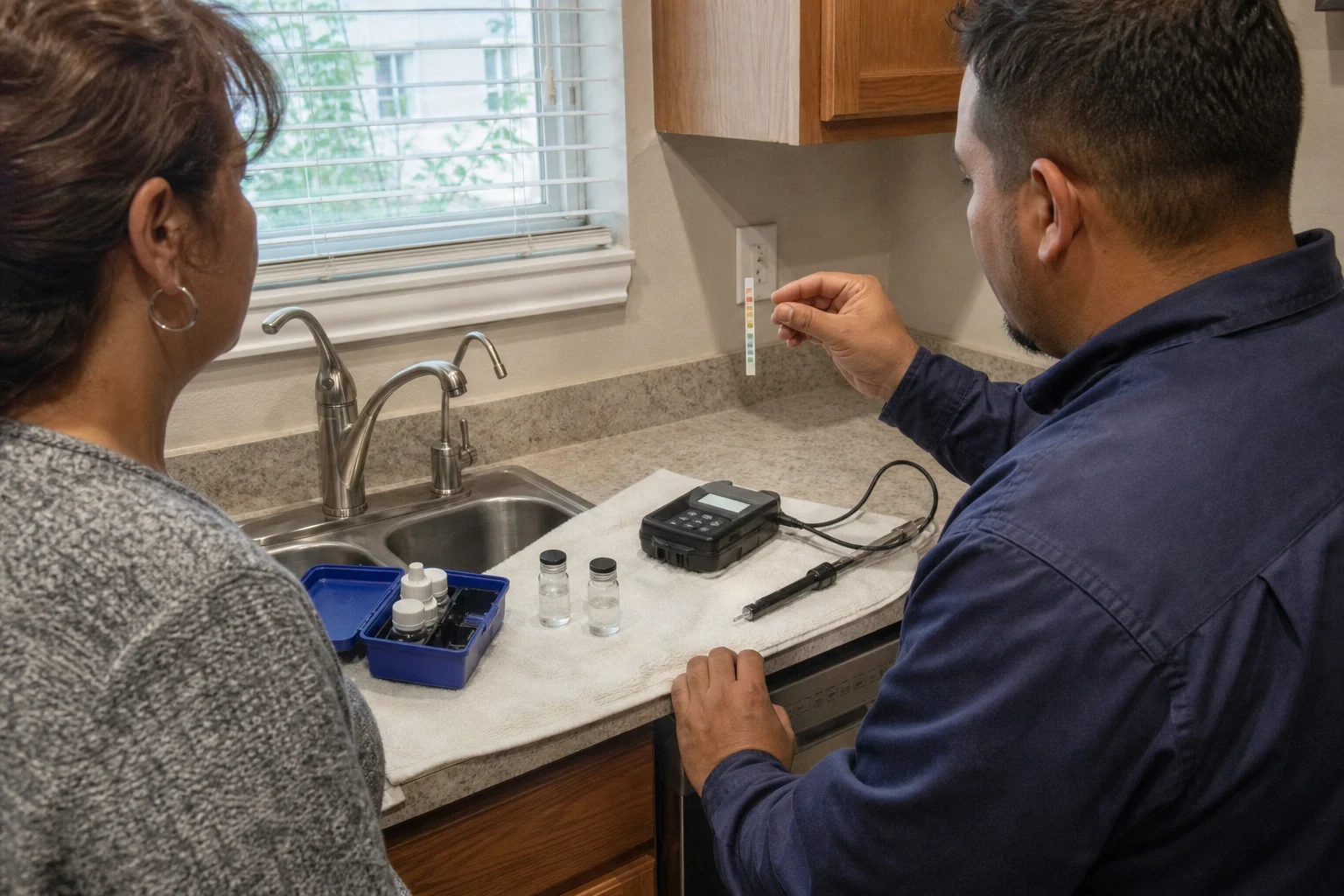
It makes sense to learn what your tap water holds before buying any treatment equipment. We run the tests at your kitchen sink, explain each reading as we go and leave the counter tidy. Some visits end with good news: your water needs nothing.
Learn what's in your water before spending on it
Most calls start with a feeling that something isn't right. Coffee tastes dull, the shower door turns cloudy, or a newborn in the house has parents thinking about the pipes. Testing replaces those guesses with numbers, so any equipment you pick solves the problem you actually have.
Every job we take on begins with water testing. When the results say your water is fine, we tell you and head out. When they show iron, hardness or a chlorine taste you don't like, we explain which option fits and why, from whole-house carbon filtration to a softener, and which choices would waste your money.
What we check during a visit
- 01
Hardness
Hardness is reported in grains per gallon and comes mostly from calcium and magnesium. That reading tells us whether a softener is worth discussing for your home, and it often comes in lower than people expect.
- 02
Iron and sediment
We check for dissolved iron and look for grit or cloudiness. Orange stains on fixtures and rust rings in the toilet usually trace back to one of these.
- 03
Chlorine level
City water carries a disinfectant to keep it safe on the way to you. We measure how much reaches your tap, which explains most pool-like tastes and smells.
- 04
pH and dissolved solids
Water that leans acidic can wear on copper pipe over time. A total dissolved solids reading gives a quick picture of overall mineral content.
- 05
Lab testing when it matters
Some things, like lead from older plumbing or bacteria in a private well, call for an independent lab rather than a quick kit. We collect the sample the right way, ship it off, then go over the report with you.
- 06
A written summary
You keep a sheet with every result and what it means. No pressure to decide anything that day.
Questions about Water testing?
Call(972) 645-6030When a water test makes sense
Something tastes or smells off
A pool-like, metallic or musty note in a glass of water deserves a closer look. Most causes are harmless, and testing shows which one you have.
Stains on sinks and tubs
Orange or brown marks point toward iron. Blue-green streaks can mean water is wearing on copper lines.
Spots and scale
White crust on faucets, cloudy glassware or a kettle that furs up quickly suggest minerals. We measure how much before anyone mentions a softener.
Older plumbing
If your home has original pipes and solder, a lead check from the tap you drink from is a sensible step.
You are on a private well
Wells around Cedar Hill and nearby towns like Ovilla and Midlothian are not tested by any utility. Checking yearly, and after any flooding, is good practice.
Someone tried to sell you a system
A second, independent test before you sign is never a bad idea.
How a test visit goes
- 1
A quick call
You tell us what you have noticed and how long it has been going on. We set a time that suits you and let you know if a lab sample might be useful.
- 2
Protecting your space
We wear shoe covers inside and lay a towel in the cabinet and on the counter before touching anything. Testing usually happens at the kitchen sink, with a second tap if the problem seems to be in one bathroom.
- 3
Testing at the tap
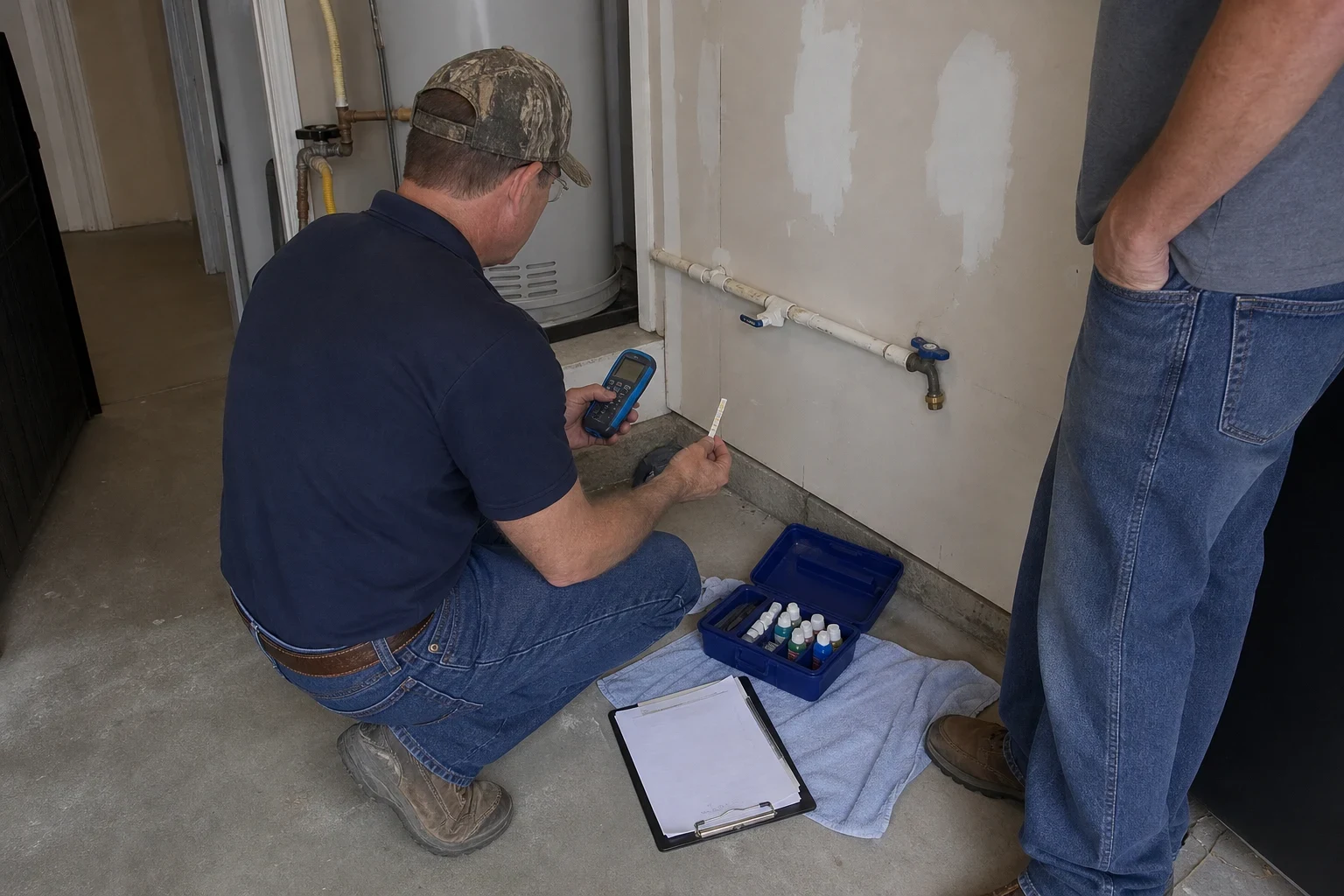
We run the water, draw samples and do the on-site tests in front of you. You can watch the readings come up and ask questions as we go.
- 4
Results in plain words
We sit down with you and go through each number. If a filter or softener would help, we explain the options and the reasons; if nothing is needed, we say so.
- 5
Tidy and done
Sample bottles, test strips and towels leave with us. We wipe the faucet and counter so the only sign we were there is your results sheet.
What affects the cost of water testing
A basic in-home test is a small, fixed job, and we tell you the cost on the phone before we come out. Price changes mainly when you need lab work or more than one location tested. You will know every line before any sample is sent.
- On-site versus lab panel
- Quick tests for hardness, iron, chlorine and pH happen at your sink. Lead, bacteria and other trace checks go to an outside lab, which adds its own fee.
- City water or well
- Wells usually call for a broader panel, including bacteria, since nobody else is testing that water.
- Number of taps
- One kitchen tap covers most homes. Testing a bathroom or the water heater outlet as well takes extra time and samples.
- Follow-up testing
- A recheck after a filter is installed, or a yearly well test, is optional and priced on its own.
Water testing questions
Isn't city water already tested?
Yes, and utilities test often. Their results describe water as it leaves the treatment system, not what comes out of your faucet after traveling through your own pipes. A home test fills in that last stretch, which is where issues like lead from old solder show up.
Is the test just a way to pitch me equipment?
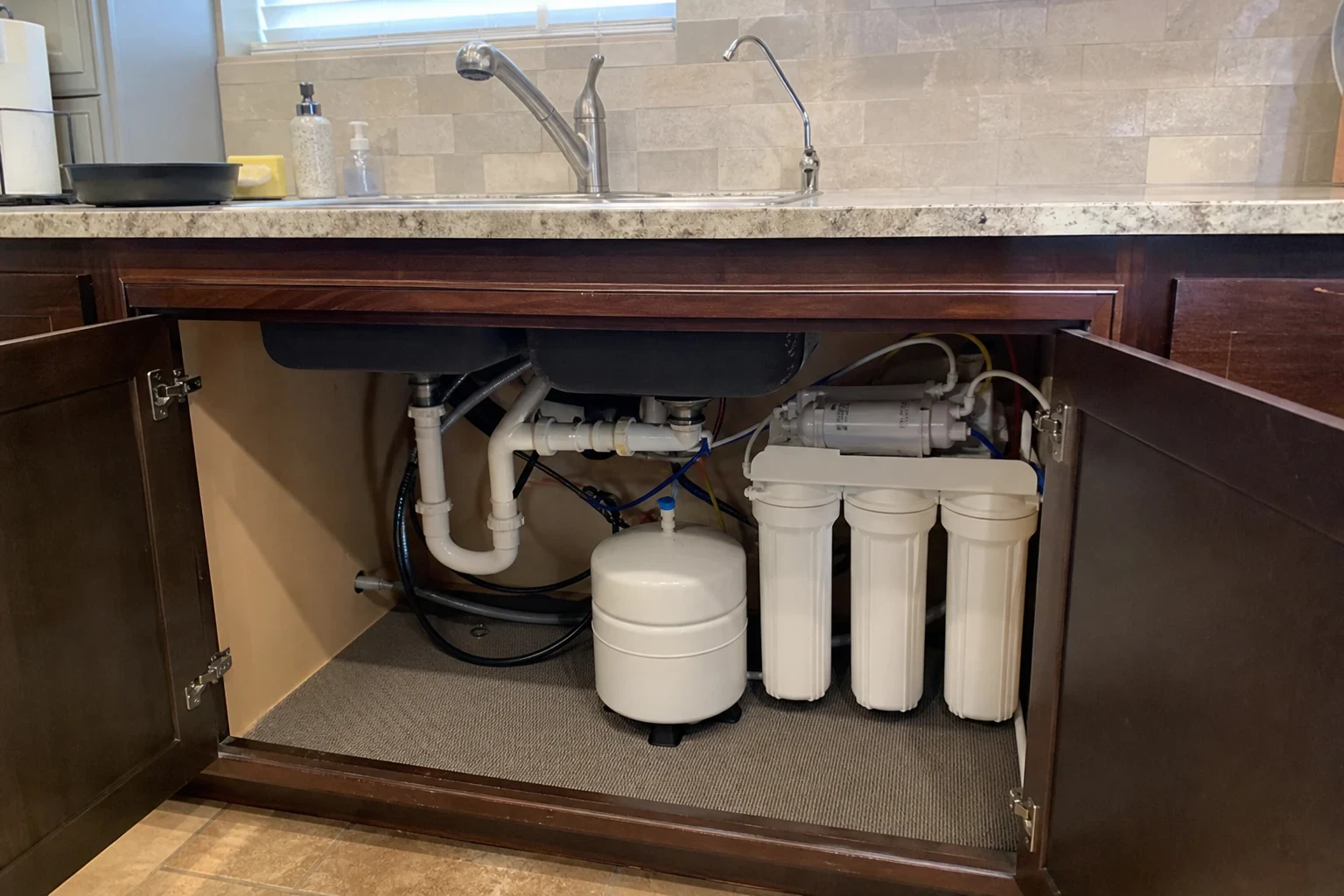
No. Equipment only comes up when a reading supports it, and plenty of visits end with us saying your water is fine. When something does need attention, we lay out the choices, such as under-sink reverse osmosis or iron and sediment filtration, and you decide in your own time.
How long does the visit take?
Most in-home tests are done in under an hour, including going over the results. Lab reports take longer to come back, and we call you to go through them once they arrive.
Do I need to prepare anything?
Just clear a little space under the kitchen sink and on the counter. If we are testing for lead, it helps to avoid running that tap for several hours beforehand so the sample reflects water that has sat in the pipes.
Do you test well water in the surrounding area?
Yes. We test wells around Cedar Hill and in nearby towns such as Red Oak and Venus. We recommend a lab panel for wells because bacteria and some contaminants cannot be read reliably on site.
Find out what is really in your water
One short visit gives you real numbers and an honest opinion, with your kitchen left spotless. Then you can decide what, if anything, comes next.